

AI-accelerated design of next-generation battery cathode material
A collaboration between Polaron and WMG combines WMG’s expertise in lithium manganese iron phosphate (LMFP) technology and electrode manufacturing with Polaron’s machine learning-driven microstructural optimisation.

The manufacture of lithium manganese iron phosphate (LMFP) battery electrodes involves multiple interdependent processes, including material preparation, mixing, coating, drying, and pressing. Each step affects the electrode’s microstructure, influencing cell performance and long-term stability. However, understanding these relationships using traditional experimental approaches requires extensive prototyping, making development slow and costly.
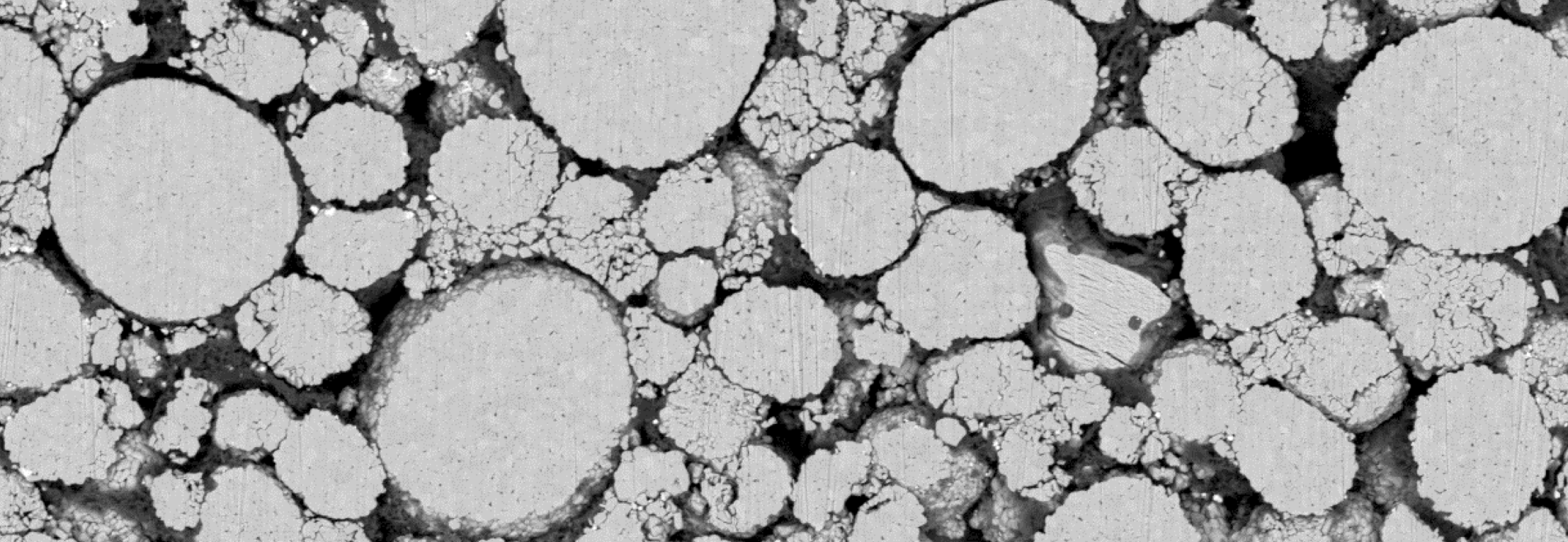
As part of this project, WMG, University of Warwick, initially manufactured a range of different battery cells, each produced with variations in three key manufacturing parameters. The collected data included both high-resolution 2D imaging data of the electrodes and electrochemical cycling data from battery performance tests.
Using the Polaron platform, firstly rapid batch-segmentation was performed using our AI-based algorithms to process the 2D electrode images, identifying key microstructural features. These segmented images were then reconstructed into 3D electrode models, providing insight into battery transport resistivity and diffusivity properties that can only be observed in three dimensions. By integrating these reconstructions with electrochemical data, Polaron’s platform determined the optimal manufacturing parameters for improving cell performance, which WMG is now implementing in production.
By integrating machine learning into the manufacturing workflow, this project is improving efficiency, reducing production costs, and accelerating the commercialisation of LMFP technology. The findings will contribute to the wider adoption of AI in battery manufacturing, supporting the development of next-generation energy storage solutions.